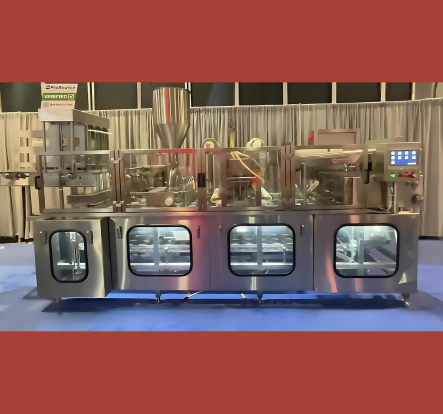
Investing in a cup filling machine is a significant decision for any food manufacturing business. The right equipment can dramatically improve your production efficiency, product quality, and bottom line. The wrong choice can lead to costly downtime, product waste, and missed opportunities.
This comprehensive buying guide will walk you through the key factors to consider when selecting cup filling and sealing equipment for your operation.
Step 1: Define Your Product Requirements
Before looking at any equipment, you need a clear understanding of what you'll be filling. Different products require different filling technologies.
Questions to Answer:
- What type of product are you filling? (liquid, viscous, particulate, powder)
- What is the product viscosity? (water-thin, honey-thick, paste)
- Does the product contain chunks or particles?
- Is the product hot-filled or cold-filled?
- What are the product's temperature requirements?
- Does the product foam easily?
- Are there special handling requirements (oxygen-sensitive, shear-sensitive)?
Filling Technology by Product Type
Liquid products (juices, milk, thin sauces): Gravity, pressure, or flow meter filling
Viscous products (yogurt, sour cream, hummus): Positive displacement piston or servo pump filling
Particulate products (cottage cheese, deli salads): Auger or volumetric cup filling with larger orifices
Dry products (granola, coffee): Auger, vibratory, or volumetric filling
Step 2: Determine Your Container Specifications
Cup filling machines are designed for specific container types and sizes. Ensure the equipment can handle your packaging:
Container Checklist:
- Container material (plastic, paper, aluminum, composite)
- Container shape (round, square, rectangular, oval)
- Size range (minimum and maximum volumes)
- Container dimensions (height, diameter, flange width)
- Lid/seal type (foil, film, snap-on lid, overcap)
- How many different container sizes will you run?
Step 3: Calculate Your Production Capacity Needs
Sizing your equipment correctly is critical. Too small means you can't meet demand; too large means wasted capital.
Capacity Calculation Formula:
Required Speed (cups/min) = Daily Volume ÷ Operating Minutes ÷ Efficiency Factor
Example: 80,000 cups/day ÷ 480 minutes (8-hour shift) ÷ 0.85 efficiency = 196 cups/minute required
Plan for Growth
Always size equipment for 20-30% above your current needs to accommodate growth. It's far more expensive to replace undersized equipment than to have some excess capacity from the start.
Speed Ranges by Machine Type:
- Entry-level inline: 10-40 cups/minute
- Mid-range inline: 40-100 cups/minute
- High-speed inline: 100-150 cups/minute
- Rotary machines: 100-320+ cups/minute
Step 4: Evaluate Fill Accuracy Requirements
Fill accuracy directly impacts your profitability and regulatory compliance:
- Overfilling = Product giveaway (money lost)
- Underfilling = Regulatory violations, customer complaints, legal liability
Industry-standard fill accuracy for cup filling machines:
- Liquids: ±0.25% to ±0.5%
- Viscous products: ±0.5% to ±1.0%
- Particulates: ±1.0% to ±2.0%
Step 5: Consider Changeover Requirements
If you run multiple products or container sizes, changeover time significantly impacts productivity.
Changeover Considerations:
- How many different products will you run?
- How often will you change between products?
- How many container sizes will you use?
- Do you need tool-less changeover capability?
- What is the acceptable changeover time?
Inline machines typically offer faster changeovers (15-30 minutes) compared to rotary machines (30-60+ minutes).
Step 6: Assess Sanitary and Regulatory Requirements
Food packaging equipment must meet strict hygiene standards:
- FDA compliance - 21 CFR Part 110 requirements
- 3-A Sanitary Standards - For dairy and food equipment
- USDA approval - For meat, poultry, and dairy products
- CIP capability - Clean-in-Place systems for efficient sanitation
Ensure all product contact surfaces are food-grade stainless steel (304 or 316 grade) with proper surface finishes.
Step 7: Evaluate Total Cost of Ownership
The purchase price is just the beginning. Consider the total cost of ownership:
- Initial equipment cost
- Installation and commissioning
- Training
- Spare parts inventory
- Ongoing maintenance costs
- Energy consumption
- Consumables (sealing film, foil, etc.)
- Downtime costs
A cheaper machine with poor reliability may cost more in the long run than a higher-quality machine with better uptime.
Step 8: Assess Manufacturer Support
Your relationship with the equipment manufacturer doesn't end at purchase. Consider:
- Technical support availability - 24/7 support? Local service?
- Spare parts availability - Lead times, stocking levels
- Training programs - Operator and maintenance training
- Installation support - Turnkey installation available?
- Warranty terms - What's covered, for how long?
- Manufacturer reputation - Track record, references
Why Choose A.T.S. Engineering
With 30+ years in the industry, A.T.S. Engineering provides complete support from initial consultation through installation, training, and ongoing service. Our 24/7 technical support and North American manufacturing ensure you're never left waiting for parts or assistance.
Your Cup Filling Machine Buying Checklist
Before You Buy, Confirm:
- Machine handles your product type and viscosity
- Accommodates all your container sizes
- Meets your speed requirements with growth buffer
- Fill accuracy meets your requirements
- Changeover time is acceptable
- Meets all regulatory requirements
- Fits your facility layout and utilities
- Within budget including installation and training
- Manufacturer provides adequate support
- References from similar applications checked
Get Expert Help with Your Decision
Choosing the right cup filling machine is a significant investment that will impact your operation for years to come. At A.T.S. Engineering, we've helped hundreds of food manufacturers select and implement the right packaging equipment for their needs.
Contact us for a free consultation. We'll discuss your specific requirements and provide recommendations tailored to your operation - with no obligation.